
What should you do in your first week in Australia? Get an Australian SIM first, then open a bank account, then apply for your free TFN online with the ATO. After that set up myGov, keep one super fund and save your visa conditions from VEVO.
I landed on the Gold Coast in November 2019 with two bags and a plan to stay a year, max. My money ran out much faster than I expected, and it took me six months to land my first job. Some of that was bad luck. Some of it was me doing things in the wrong order and losing weeks I didn't have.
Your first week sets up everything after it. Here's the order I'd do it in if I landed tomorrow.
Day 1: get an Australian SIM
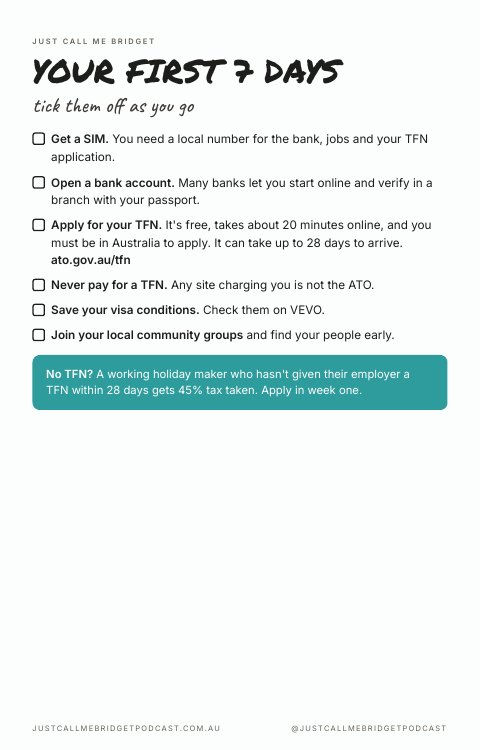
Everything else needs an Australian phone number: your bank, job applications, real estate agents, even your TFN application. A prepaid SIM from any supermarket or the airport is enough to start. All you need is your passport. Don't lock yourself into a long contract in week one.
Day 1 or 2: open your bank account
Some of the big banks let you open an account online before you even fly, and then you verify your ID in a branch with your passport. If you didn't, walk into a branch in your first few days. You need an Australian account to get paid, and most employers won't pay into an overseas one.
While you're there, set up a second savings account. I talk about this in the journal: one account for spending, one for bills and one for savings, even if it's $20 a week. Money you don't see is money you actually keep.
Day 2: apply for your TFN (it's free)
Your Tax File Number is free, and you apply online with the ATO once you're in Australia. It can take up to 28 days to arrive in the post, which is exactly why you apply now and not when you get a job offer. Use an address where you'll actually get your mail in a few weeks.
When you start a job you fill in a TFN declaration. If you haven't got your number yet, you have 28 days to give it to your employer. After that, they have to withhold 45% of your pay. On a working holiday visa, your tax should be 15% on the first $45,000, but only if your employer is registered with the ATO as an employer of working holiday makers. If they're not, they withhold at the foreign resident rate of 30%. Ask them on day one. My payslip guide shows you where to check.
Week 1: sort super and myGov
On top of your wage, your employer pays 12% into a superannuation fund. It's your money, and when you leave Australia for good you can claim it back. The mistake almost everyone makes is ending up with a new super account at every job, each one charging its own fees. Create a myGov account, link it to the ATO, and you can see every fund you have and roll them into one.
Good news if you're starting now: from 1 July 2026 employers have to pay your super at the same time as your wages, not every three months. So if you check your fund and nothing has landed for weeks, ask about it.
Week 1: know your visa and your health cover
Log into VEVO on the Home Affairs website and screenshot your visa conditions and expiry date. Put the expiry in your calendar with a reminder six months before. That six month mark is your real planning deadline.
Then health cover. Some countries have a reciprocal health care agreement with Australia that lets you enrol in Medicare. If yours doesn't, you need private cover. If you're on a student visa, Overseas Student Health Cover isn't optional, it's part of your visa.
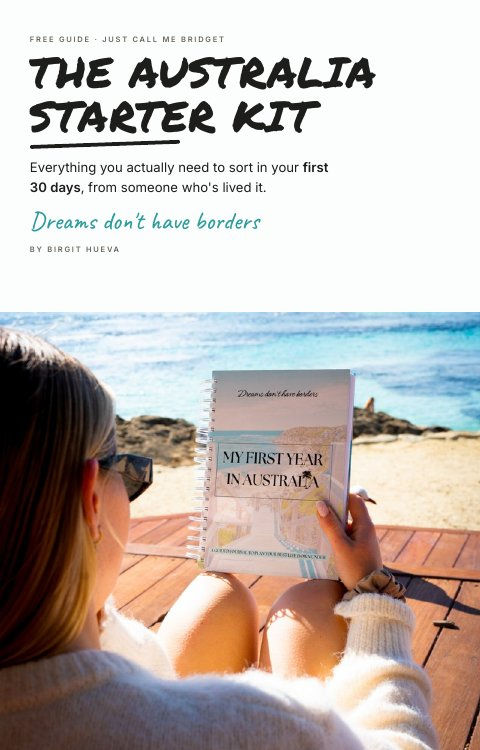
TFN, bank and SIM in week one, then health cover, your visa rights and super. Each week has a short checklist and a reflection question, so the admin doesn't swallow the fact that you just moved to the other side of the world.
Start a visa folder now
Make one folder on your phone and one in Google Drive: passport, visa grant letter, payslips, rent receipts, certificates. You'll need this for your 88 days and a second visa, a sponsorship, RPL or even just a rental application. Start it in week one and it's never a scramble later.
Quick questions
How long does a TFN take to arrive?
It can take up to 28 days to arrive by post, so apply as soon as you're in Australia, even before you have a job.
What happens if I don't give my employer a TFN?
You have 28 days after starting to provide it. After that your employer must withhold 45% of your pay.
What tax do working holiday makers pay?
15% on the first $45,000, as long as your employer is registered with the ATO as an employer of working holiday makers. Unregistered employers withhold at the foreign resident rate of 30%.